

![[NEEDS INPUT: alt text]](https://cdn.sanity.io/images/iexz7ctt/development/02d1e3b043ef23c1da7d24de7cfdc5d224c0a911-6000x3798.jpg?w=3840&q=75&auto=format&fit=max)
Overview
A former police precinct at the flashpoint of the 1967 Newark Rebellion is reimagined as a museum for justice, healing, and collective memory.
![[NEEDS INPUT: alt text]](https://cdn.sanity.io/images/iexz7ctt/development/cf89a37033fb69ee0ccde1ad53b0a34c94b8f22a-6000x4000.jpg?w=3840&q=75&auto=format&fit=max)
Opportunity
Newark's First Police Precinct has carried the weight of the 1967 Rebellion for decades. The city needed a place to face that history and move forward together.
Newark's First Police Precinct was the flashpoint of the Newark Rebellion, scarring the community for generations. A building that once represented public safety stood as a symbol of that trauma for more than 50 years. In 2020, Mayor Ras Baraka announced a plan to transform the precinct into a community museum and hub for violence prevention and trauma recovery, turning a monument of oppression into a place of learning, reflection, and healing.

Why This Matters
01
Healing Trauma
Decades of multigenerational grief remained unresolved. The community needed a place where sorrow and aspirations could be named, shared, and transformed into a civic purpose.
02
Preserving Memory
The precinct is more than a building; it is a site of generational trauma. Transforming it acknowledges what happened there and gives the community a place to reckon with that truth and document memories.
03
Building Civic Trust
By redirecting public safety resources toward community healing, the City of Newark signals a new relationship between residents and their government, one built on accountability and shared investment.
Re-imagining the Precinct building where the Newark Rebellion began will remind us of our city’s history of fighting for justice while building a future where violence is seen as a public health issue, in which policing is only one part of the solution. The museum will enable residents to both record Newark’s history and see it directly.
Solution
By adding a new addition, Gensler transformed Newark’s former First Police Precinct into an open, intergenerational museum that connects a traumatic past to healing, learning, and civic hope.
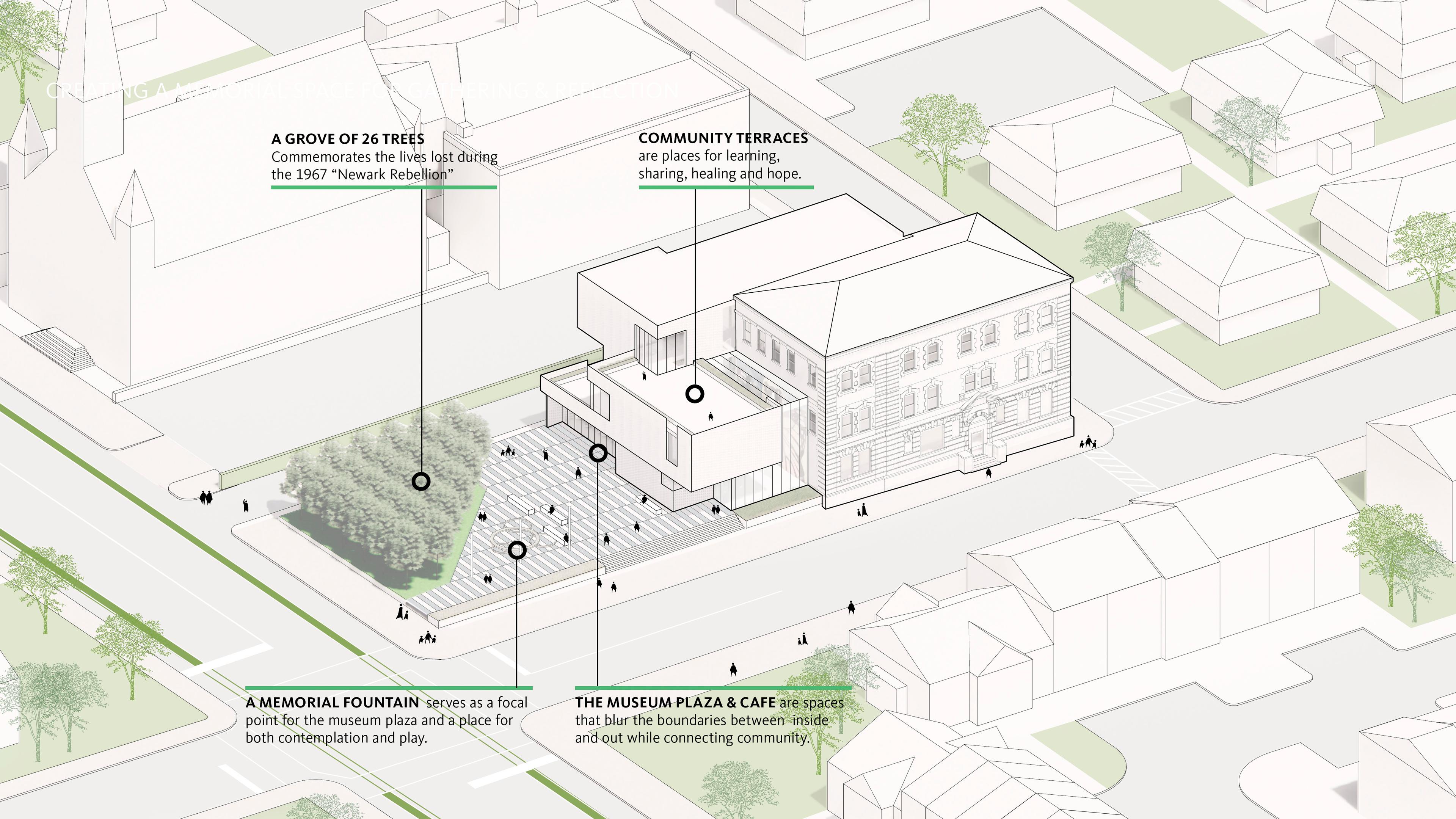
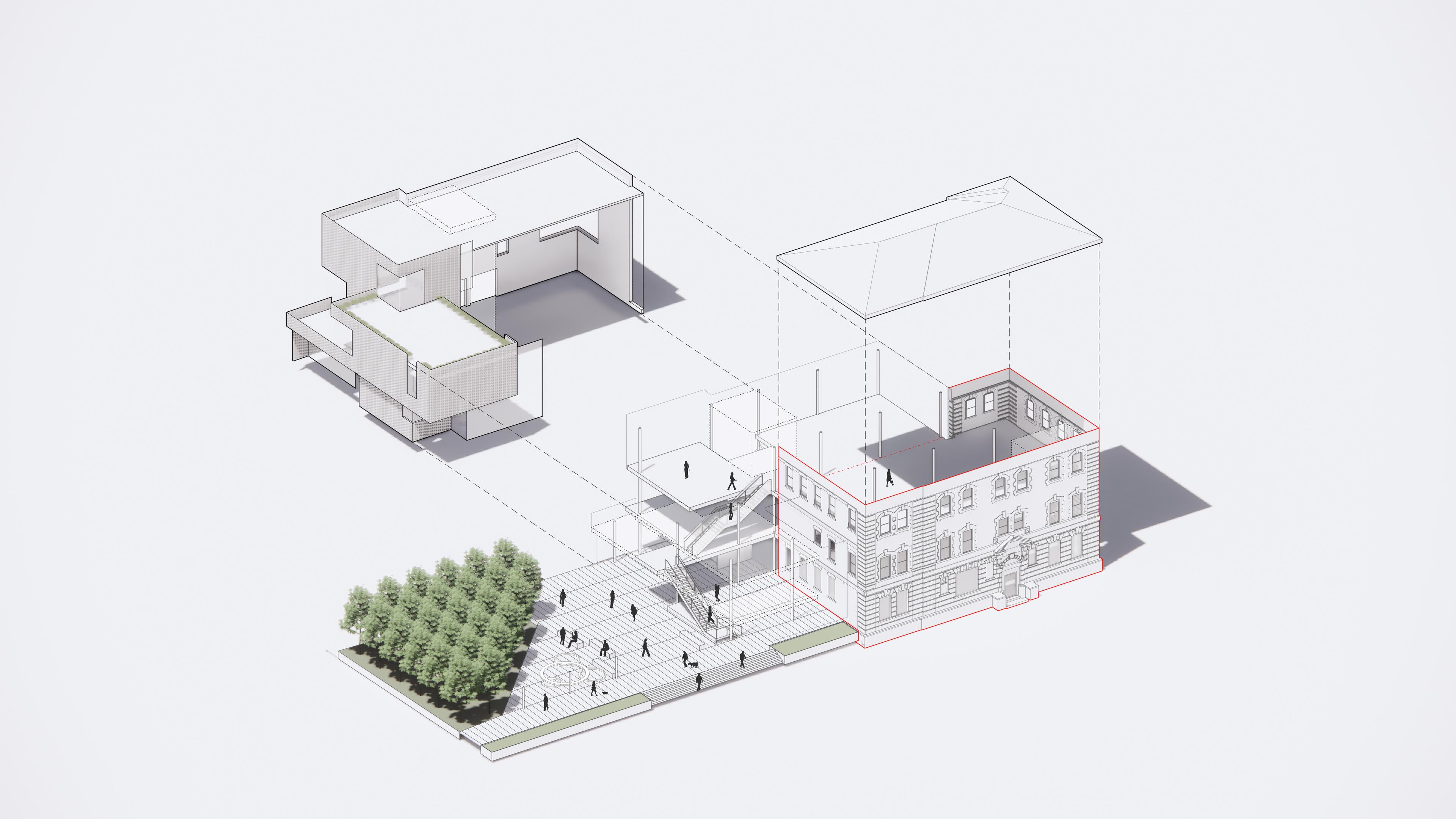
The concept preserves the existing 10,000-square-foot precinct structure as a salient reminder of the past, pairing it with a new transparent addition that contrasts the building's heavy, defensive masonry. A light-filled atrium serves as the welcoming front door, connecting the two structures and opening the museum to the street. The addition includes galleries, community rooms, a cafe, roof terraces, a community plaza, and newly created Office of Violence Prevention and Trauma Recovery. Inside and outside blur intentionally, creating spaces for gathering, reflection, and healing.
Related Content
10K
Adaptive Reuse of Original First Police Precinct · sqft
8
Community Design Charrettes
26
Trees in the Memorial Grove, Honoring Lives Lost During Newark Rebellion
From brief to build: how eight community charrettes, deep historical research, and a shared vision for justice shaped the design of a new community museum.
Listening was the first step of the design process. Integrating practice with teaching, Gensler worked with NJIT students to research the history of the 1967 Newark Rebellion and the precinct's role in it. That research grounded eight community design charrettes that joined residents, the Museum Advisory Committee, and city officials to share stories and define aspirations for the site. Urban mapping studies and community input directly shaped the program, the spatial sequence, memorial landscape, and the decision to preserve the original building as a witness to history rather than erase it.
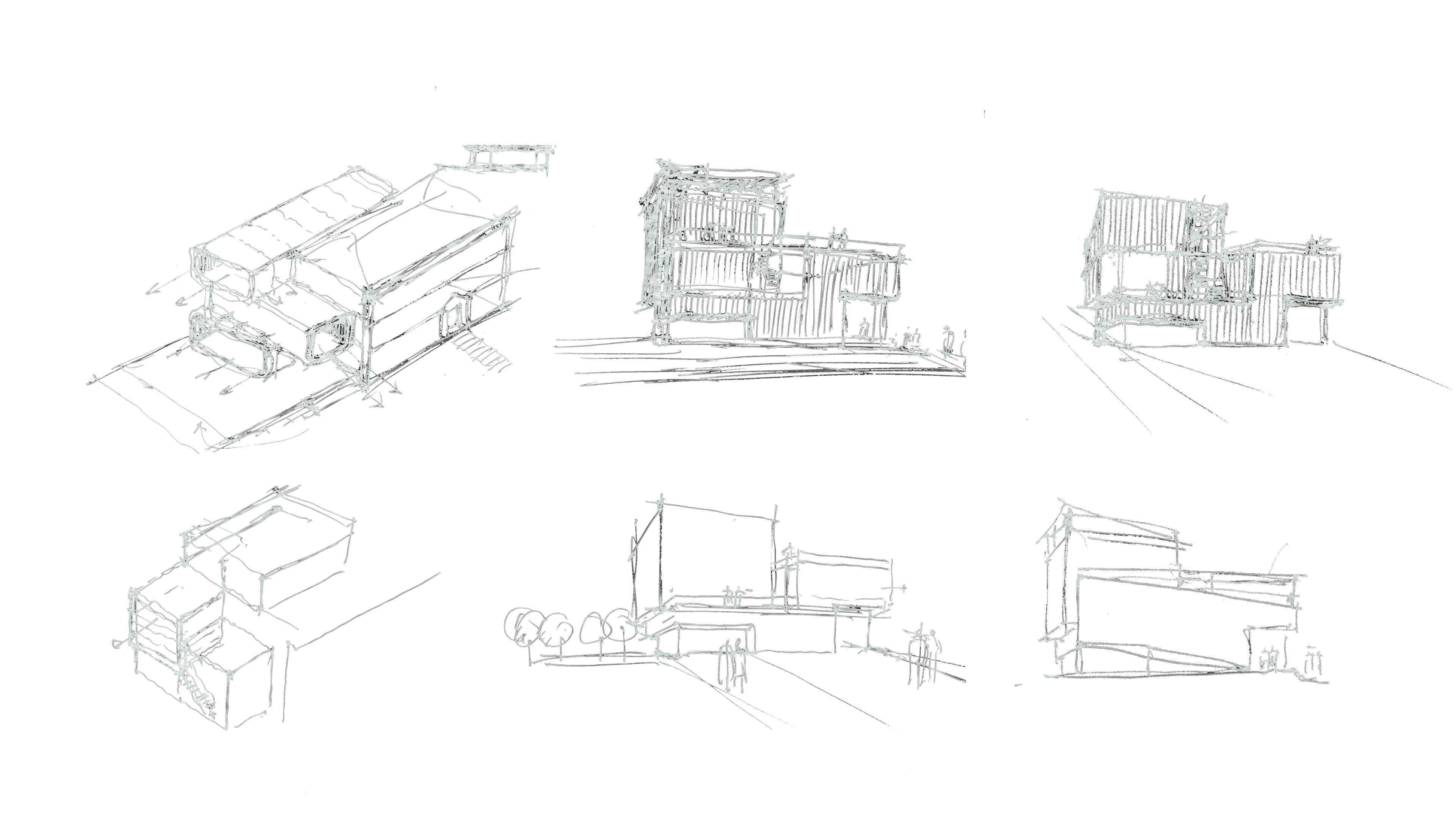
Designing With the Community
Community charrettes revealed a deeper understanding of residents’ lived experience and captured their aspirations for the future.
Impact
A monument of injustice is reborn as a place where Newark's history is honored, its trauma is named, and its future is built together.
By reimagining the former precinct, the museum preserves collective memory while creating public space for healing, activism, and violence prevention.
![[NEEDS INPUT: alt text]](https://cdn.sanity.io/images/iexz7ctt/development/236ac8d88a75dc87db7b9626d8b59a8df38e8862-6000x3060.jpg?w=3840&q=75&auto=format&fit=max)
What Changed Because of This
01
Civic Symbolism
The site of the Newark Rebellion establishes a new identity as a place of learning, storytelling, and community pride.
02
Public Access
Community rooms, terraces, galleries, a cafe, and a public plaza become community assets designed for everyday use.
03
Shared Space for Healing
By housing the Office of Violence Prevention and Trauma Recovery alongside exhibition and gathering spaces, the museum proposes healing as a shared civic experience.

This museum is designed to showcase Newark’s rich history and provide a multi-generational space for the community to share their stories, learn, and heal.
Recognition
Architect Magazine
The Architect’s Newspaper
Jersey Digs
Team
Project Leadership

FAQ
What is the Newark Community Museum of Social Justice?
Where is the project located?
Why was the former police precinct chosen for the museum?
How did the community inform the design?
Related Content

![[NEEDS INPUT: alt text]](https://cdn.sanity.io/images/iexz7ctt/development/69ce399292468c21ba2fb37cc1775080927dd6aa-5472x3648.jpg?w=3840&q=75&auto=format&fit=max)
![[NEEDS INPUT: alt text]](https://cdn.sanity.io/images/iexz7ctt/development/5c3afdca5ecc6eb24501bed1bf708ccaf12f7066-8192x5464.jpg?w=3840&q=75&auto=format&fit=max)