

![[NEEDS INPUT: alt text]](https://cdn.sanity.io/images/iexz7ctt/development/84ec96fbe75c4a08a54f20fc5a4fa8c2ee16d903-6000x2200.png?w=3840&q=75&auto=format&fit=max)
Overview
The winning Healing Kharkiv proposal offers a scalable approach to repairing war-damaged neighbourhoods, preserving what can be saved while rebuilding homes and restoring connections between communities.
![[NEEDS INPUT: alt text]](https://cdn.sanity.io/images/iexz7ctt/development/dabeff431b8fa4e837e5063566e132edc5841e29-6000x3375.jpg?w=3840&q=75&auto=format&fit=max)
Opportunity
Kharkiv’s recovery creates an opportunity to preserve viable homes, rebuild where necessary and help communities reconnect with the neighbourhoods they know.
In Kharkiv, the impact of war varies significantly from building to building, making wholesale demolition neither necessary nor desirable. The Norman Foster Foundation’s Kharkiv Housing Challenge called for a housing response that could address destruction at enormous scale while supporting the people who remained. Against 250 global submissions, Gensler & Cundall’s collaborative first-prize proposal began with what could be retained. Existing structures were assessed according to their condition, allowing viable homes to be repaired while replacement housing is introduced where damage is too severe. This creates a route to recovery that maintains continuity with Kharkiv’s established urban fabric and identity.
![[NEEDS INPUT: alt text]](https://cdn.sanity.io/images/iexz7ctt/development/71d5a222734476754825521a08aff91641acc32d-3966x6000.jpg?w=3840&q=75&auto=format&fit=max)
Why This Matters
01
Protecting Familiar Places
For residents already displaced or living with damage, retaining familiar homes and neighbourhood structures can protect a sense of continuity at a time of profound upheaval.
02
Enabling Recovery at Scale
Ukraine’s recovery will require solutions that can be delivered quickly across many different building conditions, without relying on a one-off response for every damaged site.
03
Rebuilding Community Life
Reconstruction also carries a social responsibility: restoring shared spaces can help neighbours reconnect, rebuild trust, and bring everyday community life back alongside the physical recovery.
Healing Kharkiv moves beyond material reconstruction. It puts at its heart questions of belonging, identity, healing, and social cohesion.
Solution
Repair, rebuild, and reconnect form a repeatable toolkit that combines housing renewal with new construction and shared spaces for community life.
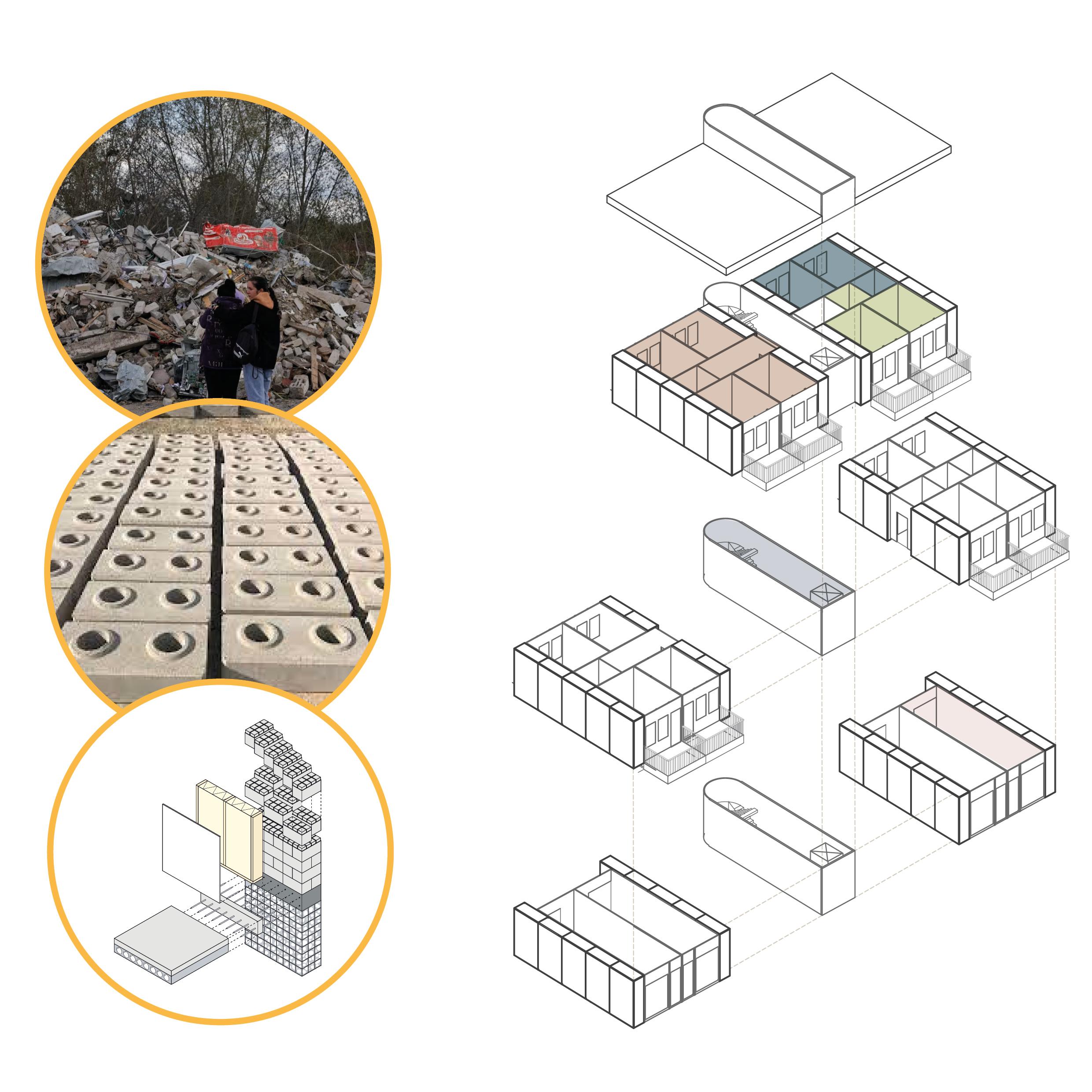
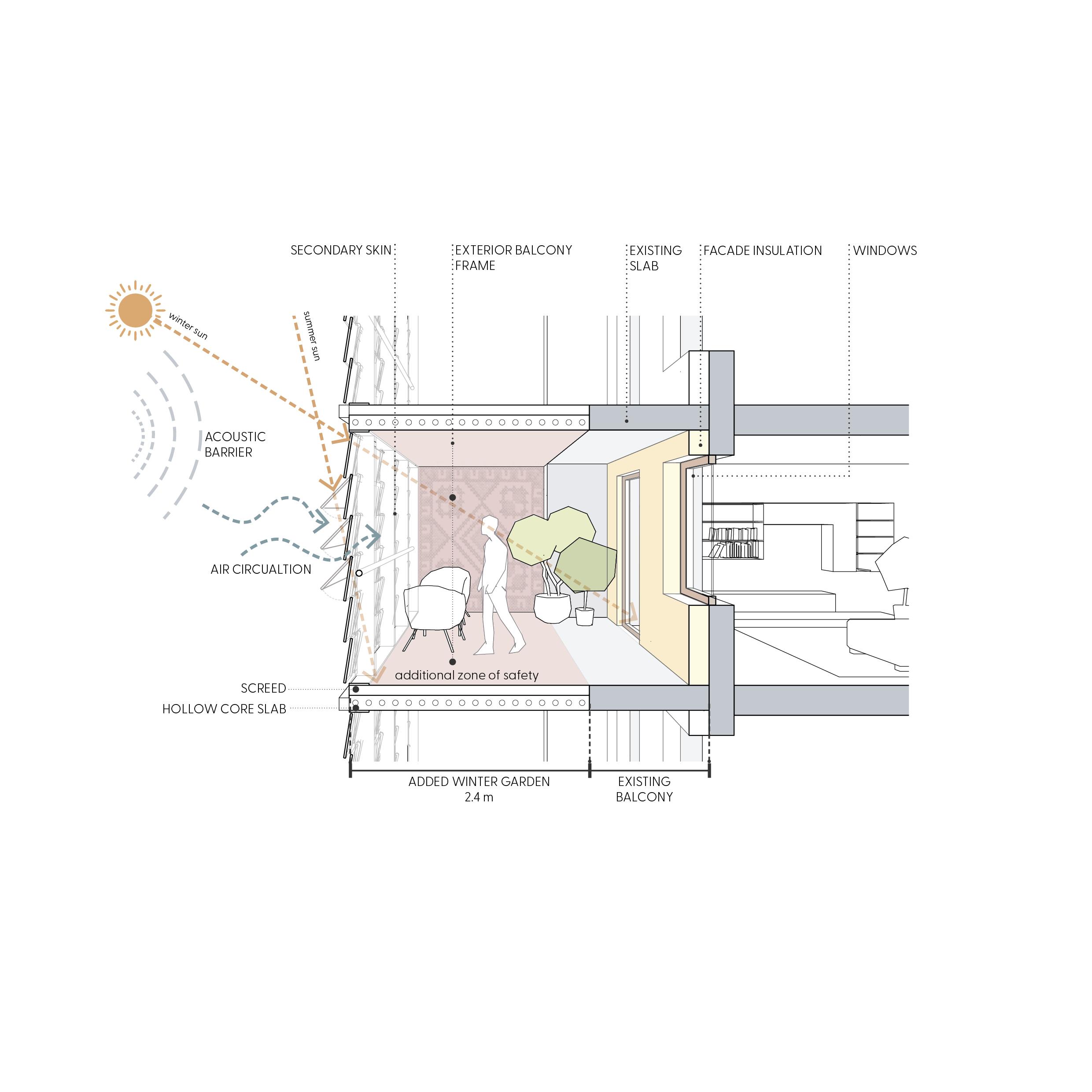
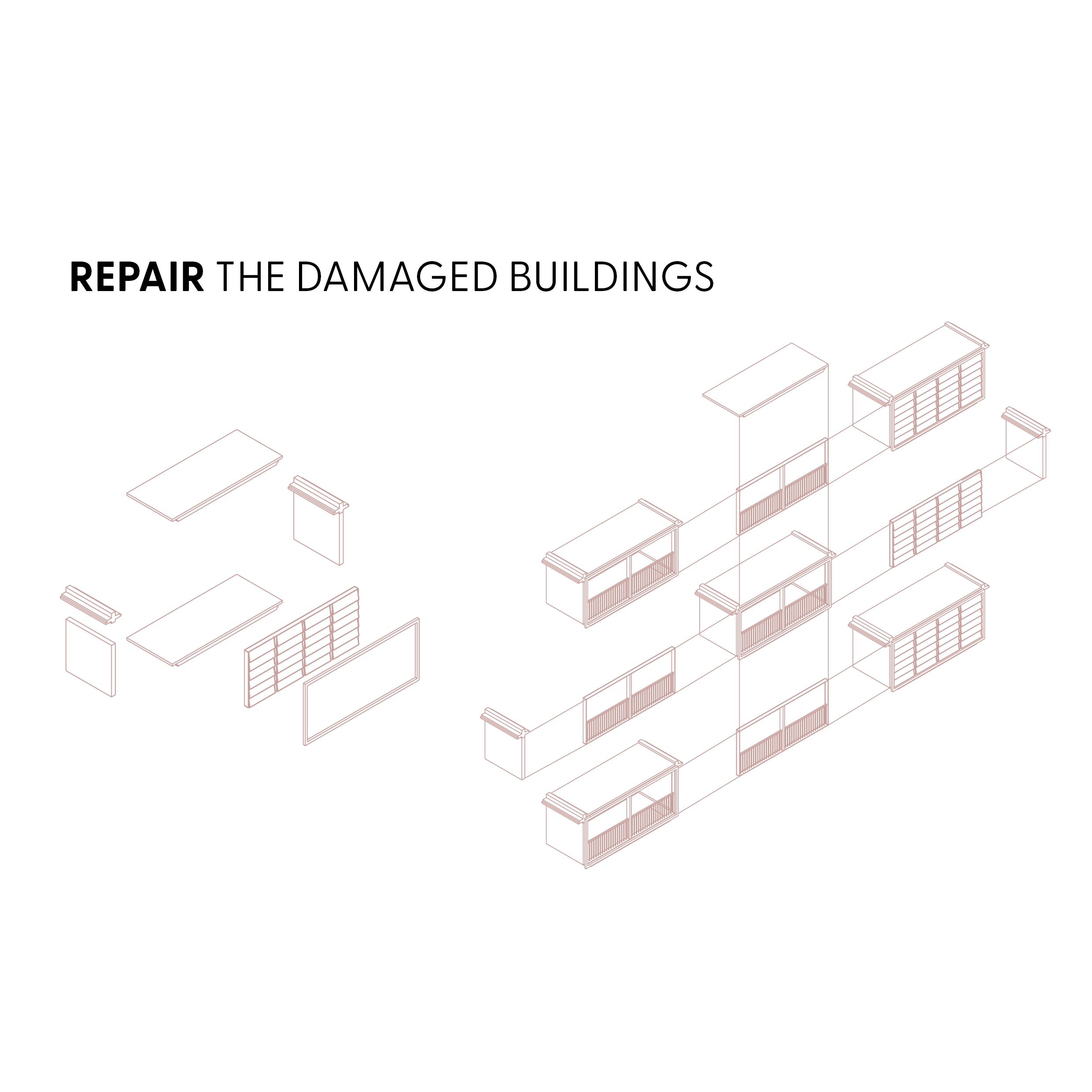
Buildings that can be saved are strengthened with prefabricated exoskeletons that improve structural stability and thermal performance, while adding winter gardens and better access. Where damage is too severe, modular low-rise housing fills gaps within the existing neighbourhood, creating more human-scaled places to live. Rubble from demolished structures is processed locally and reused within new construction, reducing dependence on imported material. The same modular thinking extends into the public realm, where adaptable community spaces help reconnect fragmented neighbourhoods and support everyday life as Kharkiv recovers.
![[NEEDS INPUT: alt text]](https://cdn.sanity.io/images/iexz7ctt/development/5aedc57894ef8e7bdb06cfba8158d0a50a556dc7-6000x3000.jpg?w=3840&q=75&auto=format&fit=max)
Related Content

60%
Embodied Carbon Reduction
Over 90%
War Rubble Reused Locally
Approximately 2,500
Residents per Community Phase
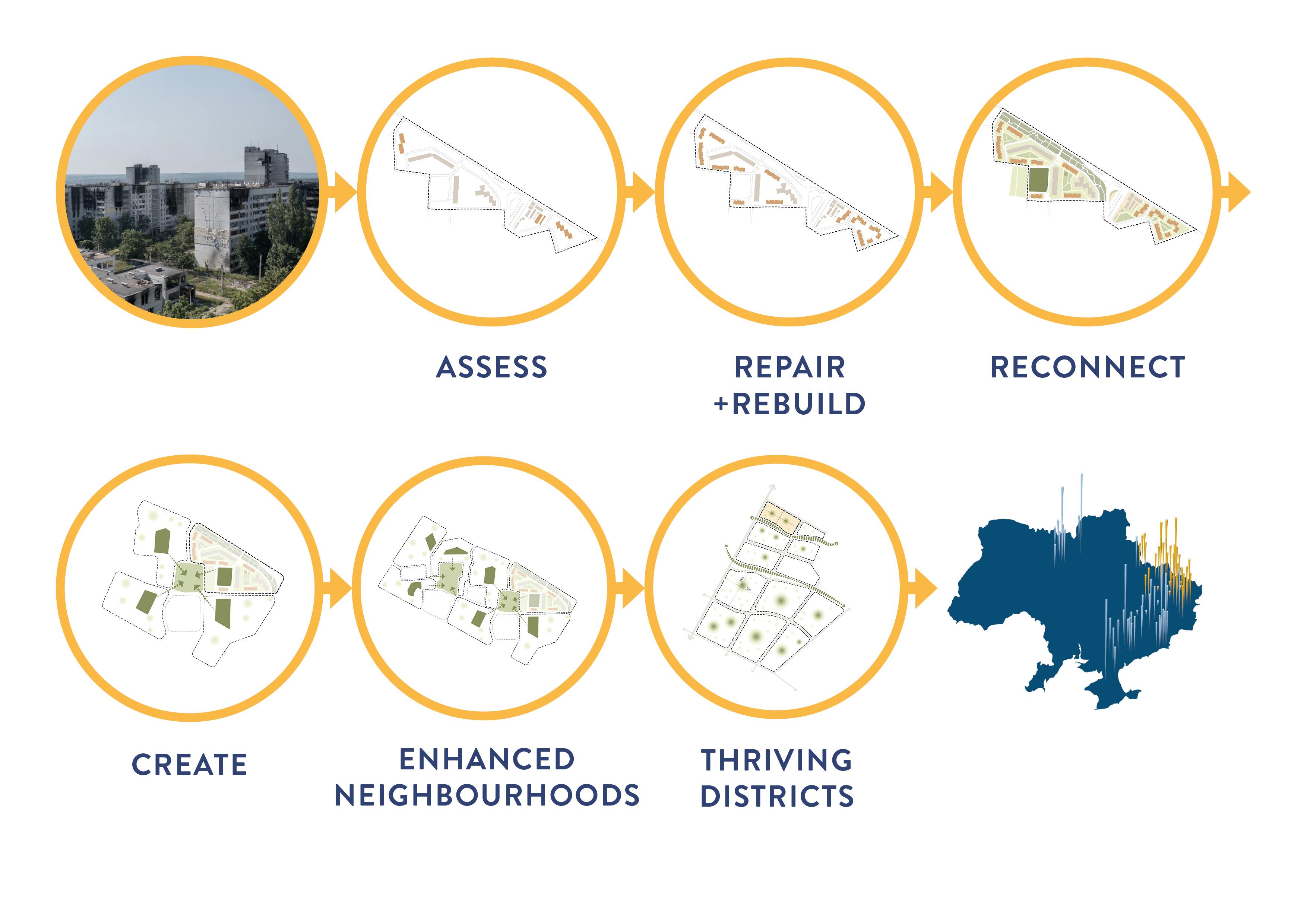
From brief to build: a scalable framework combines repair, reuse, modular construction, and community infrastructure to support Kharkiv’s recovery at multiple scales.
The process was developed as a system rather than a single building response. It begins by assessing what can be repaired, reused, or rebuilt, then scales from individual homes to neighbourhoods and wider districts. Rubble from damaged structures is repurposed into new construction components, while additive façades improve comfort and resilience without unnecessary replacement. Modular elements support faster, more adaptable assembly, and shared canopies create flexible community spaces that can evolve over time. Together, these moves establish a framework for rebuilding that is practical, resource-conscious, and responsive to changing needs.
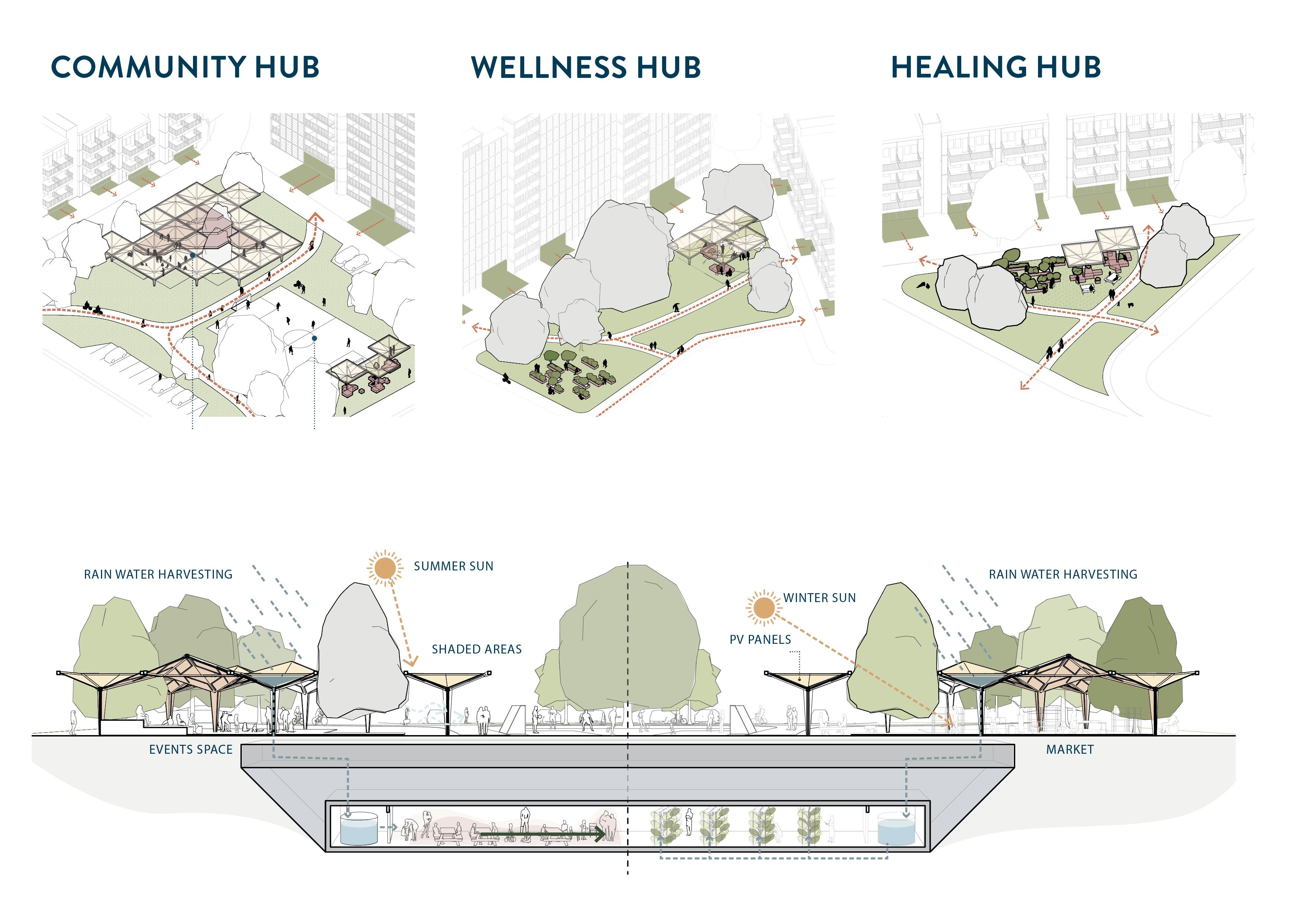
Scalable Vision
Our scalable framework moves from property to neighbourhood to district, enabling immediate repair and rebuilding to create resilient, thriving communities.
Impact
Recognised with first prize, Healing Kharkiv offers a model for recovery that preserves continuity while giving communities safer homes and a practical route toward long-term neighbourhood renewal.
Designed to work one community at a time, the framework can expand from individual buildings into neighbourhoods and ultimately across other Ukrainian cities.
What Changed Because of This
01
Safer Existing Homes
Retained apartment blocks gain structural reinforcement, improved insulation, and better access, extending their useful life while creating safer, more comfortable homes for residents.
02
Circular Rebuilding
War-damaged concrete becomes a local construction resource, with over 90% of rubble reused to cut waste and dependence on imported materials.
03
Repeatable Recovery
The framework scales from clusters of four to six buildings into larger neighbourhoods, giving cities a model that can adapt to different damage levels.
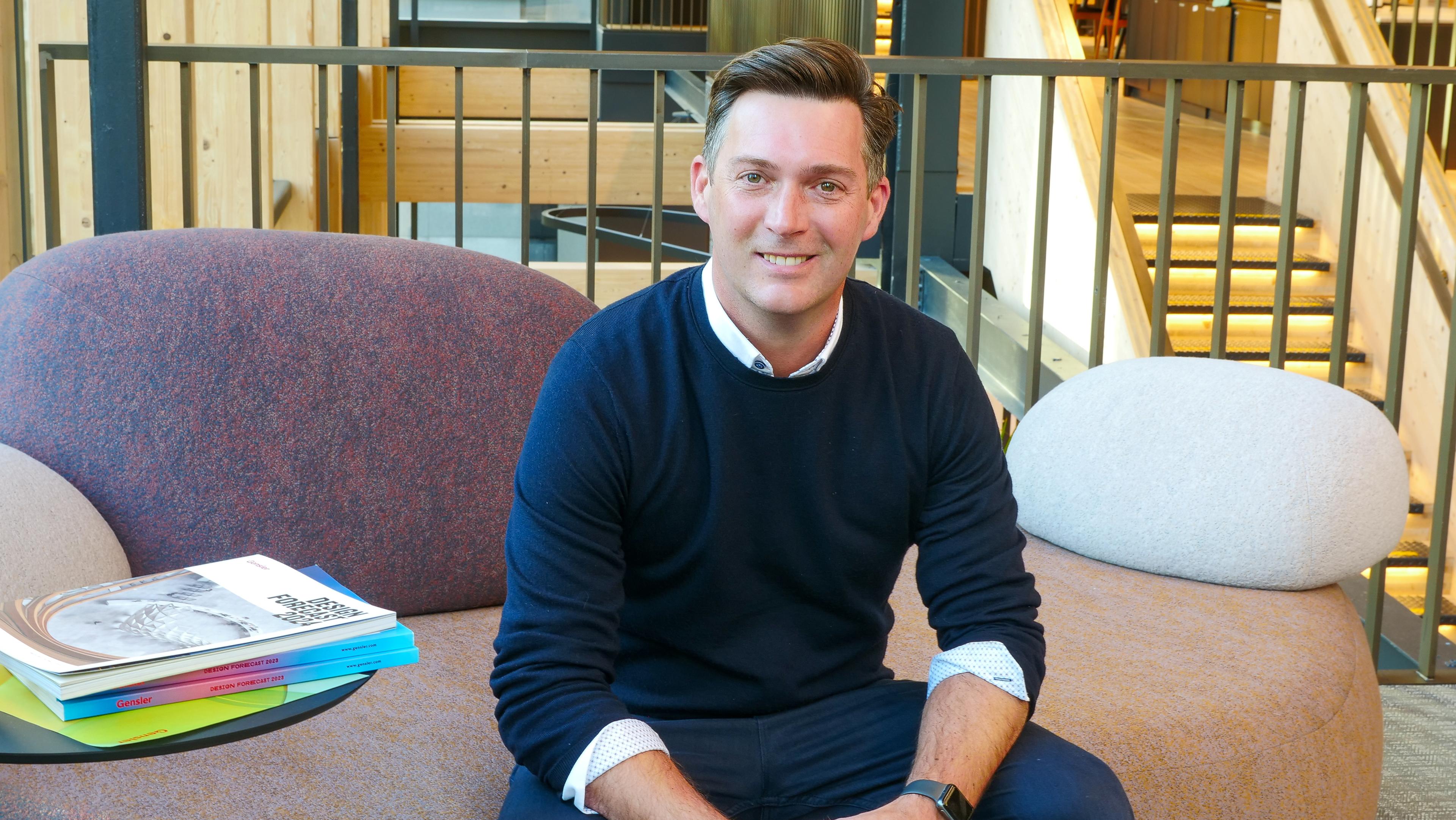
Our vision puts people at the heart of recovery, combining local knowledge, material reuse, and adaptable design to help Kharkiv heal, rebuild, and thrive sustainably.
Recognition
ArchDaily
Global Construction Review
Team
Project Leadership

FAQ
What is the Kharkiv Housing Challenge?
Where would Healing Kharkiv be implemented?
How are damaged apartment blocks repaired?
How does the design improve energy performance?
How is rubble reused?
Could Healing Kharkiv be used elsewhere?
Related Content
![[NEEDS INPUT: alt text]](https://cdn.sanity.io/images/iexz7ctt/development/a2450ad9b2345c82f49f4e3f8d814a29585332b7-5100x2869.jpg?w=3840&q=75&auto=format&fit=max)
![[NEEDS INPUT: alt text]](https://cdn.sanity.io/images/iexz7ctt/development/b62115119df4779935f72209228b8f174359bd86-6000x3376.jpg?w=3840&q=75&auto=format&fit=max)
![[NEEDS INPUT: alt text]](https://cdn.sanity.io/images/iexz7ctt/development/5f7bfbf527c108c201631bf9271ab6b0b0dc7ef0-8256x5504.jpg?w=3840&q=75&auto=format&fit=max)