![[NEEDS INPUT: alt text]](https://cdn.sanity.io/images/iexz7ctt/development/85dae32e13baef0b6d0c47a3339237e596dfcf88-6706x4471.tif)
Overview
A historic Morton Salt warehouse becomes Reverb’s headquarters, blending adaptive reuse, workplace design, and Chicago’s music culture into one creative destination.
![[NEEDS INPUT: alt text]](https://cdn.sanity.io/images/iexz7ctt/development/b4267093fcacab1093460241eb87d1fee9e7055f-6049x4081.tif)
![[NEEDS INPUT: alt text]](https://cdn.sanity.io/images/iexz7ctt/development/cef666d750c6ac653f610d3e40433e48af586d31-6649x4432.tif)
![[NEEDS INPUT: alt text]](https://cdn.sanity.io/images/iexz7ctt/development/2f46b8a8fd3ddce51ca324171fa37624002b62f1-6682x4412.tif)
![[NEEDS INPUT: alt text]](https://cdn.sanity.io/images/iexz7ctt/development/e6d462bd7efb7504b8185edd5fc8bc396ac212a2-6720x4480.tif)
![[NEEDS INPUT: alt text]](https://cdn.sanity.io/images/iexz7ctt/development/04f33c7a972043d9ee5d439d54227e23a2bdddc5-6686x4348.tif)
![[NEEDS INPUT: alt text]](https://cdn.sanity.io/images/iexz7ctt/development/804eefaa72180553b3374d236c701aa661bdb3f9-6702x4459.tif)
![[NEEDS INPUT: alt text]](https://cdn.sanity.io/images/iexz7ctt/development/32e54091e70f251ad661e91a8e5845ae3e3346ea-5100x3399.jpg?w=3840&q=75&auto=format&fit=max)
![[NEEDS INPUT: alt text]](https://cdn.sanity.io/images/iexz7ctt/development/386193b6294a8869eecf9211c25376dd736bb758-6696x4464.tif)
![[NEEDS INPUT: alt text]](https://cdn.sanity.io/images/iexz7ctt/development/bd130c3fad4c85da97980fad790fb9cd35057ebf-6509x4423.tif)
![[NEEDS INPUT: alt text]](https://cdn.sanity.io/images/iexz7ctt/development/dfbb18c256e67ce5f36ccfae8073eca74ced6433-3573x5026.tif)
![[NEEDS INPUT: alt text]](https://cdn.sanity.io/images/iexz7ctt/development/2cfc7b8bf75ed36a0738eb401243a01d9c37e0be-6720x4480.tif)
![[NEEDS INPUT: alt text]](https://cdn.sanity.io/images/iexz7ctt/development/cd5fe2777f270648da9f1d84f4f7e691322abd22-4455x6478.tif)
Opportunity
After years of remote work, Reverb sought a workplace that would connect employees while strengthening its relationship to Chicago’s music culture.
As the largest online marketplace for new, used, and vintage musical instruments, Reverb needed a headquarters that felt as authentic as the musicians, collectors, and creatives it serves. The company also faced the challenge of bringing employees back together after three years of remote work. The opportunity emerged within a former packaging building at Chicago’s historic Morton Salt Complex, home to The Salt Shed music venue. Transforming the industrial structure into a vibrant headquarters required integrating modern workplace systems while preserving the character and authenticity of the landmark building.
More about this topic

![[NEEDS INPUT: alt text]](https://cdn.sanity.io/images/iexz7ctt/development/c4781895de6716c3b73b916c4c8e8b67830cb66f-6720x4295.tif)
Why This Matters
01
Rebuilding Connection
The headquarters creates meaningful opportunities for in-person collaboration, helping reconnect employees and strengthen company culture after extended remote work.
02
Celebrating Music Culture
The workplace extends Reverb’s connection to Chicago’s music community through dedicated event, performance, and recording spaces.
03
Preserving Industrial Heritage
Adaptive reuse preserves the character of a historic Chicago landmark while supporting the needs of a growing technology company.
We wanted to build an office that had a variety of spaces for people to work from, and we wanted to make something unique to us.
Solution
Gensler translated Reverb's online marketplace into a physical workplace rooted in music, craftsmanship, collaboration, and community.
The design blends workplace functionality with music-inspired experiences that reflect Reverb’s identity. Flexible workspaces support collaboration, while a rooftop deck, recording studio, mezzanine café, indoor stage, and multipurpose event space create opportunities for gathering, performance, and community engagement. Throughout the headquarters, thoughtful materials, lighting, and instrument-inspired details reference the craftsmanship of music equipment while honoring the industrial character of The Salt Shed. Gensler also helped guide coordination between Reverb and the landlord, supporting project delivery within a uniquely complex adaptive reuse environment.
![[NEEDS INPUT: alt text]](https://cdn.sanity.io/images/iexz7ctt/development/cf2fd12482454e6c0269049584b5b1fa946f9f4f-6720x4480.tif)
![[NEEDS INPUT: alt text]](https://cdn.sanity.io/images/iexz7ctt/development/cc8d444a5dc60d1abfb322ca316f83605fb3d182-6682x4414.tif)
![[NEEDS INPUT: alt text]](https://cdn.sanity.io/images/iexz7ctt/development/b5b667e9550063f5c5dae2350c249623f3d703e8-4445x6015.tif)
![[NEEDS INPUT: alt text]](https://cdn.sanity.io/images/iexz7ctt/development/ddeecc86cee69edab24e278b73a55e9a625ca5bb-6720x4480.tif)
![[NEEDS INPUT: alt text]](https://cdn.sanity.io/images/iexz7ctt/development/cce4a329b58866e48a0151f4d4ac6466ffb84de1-4244x6281.tif)
Related Content
27.4K
Project Size · sqft
1,929
Original Building Completion Date
From brief to build: transforming a historic industrial building into a workplace that connects people through music, culture, and community.
The design process focused on balancing preservation with workplace transformation. Working within a historic Morton Salt facility meant introducing new infrastructure, technology, and amenities while maintaining the authenticity of the existing structure. The team collaborated closely with Reverb and project stakeholders to align workplace goals, event programming, and brand expression. Instrument-inspired moments were integrated throughout the space, creating subtle connections to Reverb’s marketplace while ensuring the building remained the centerpiece of the employee experience.
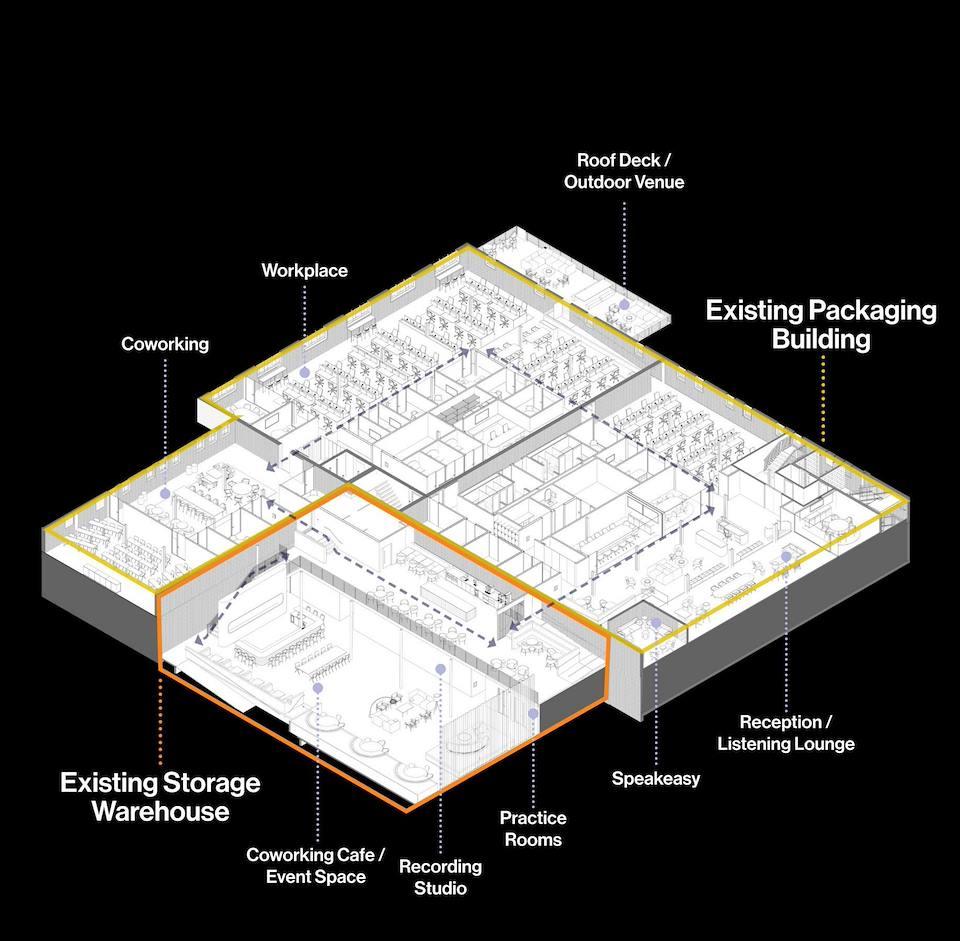
Designing for Connection
Workplace, coworking, performance, and recording spaces interlock across the former industrial building, creating a connected ecosystem centered on music.
Impact
The headquarters provide a workplace experience that strengthens company culture while deepening Reverb’s connection to Chicago’s music community.
The completed workplace supports collaboration, creativity, events, and music culture while preserving the spirit of a Chicago landmark.
![[NEEDS INPUT: alt text]](https://cdn.sanity.io/images/iexz7ctt/development/8950d53c1cfa4d5260e778d440fcca9acef8a769-6720x3980.tif)
What Changed Because of This
01
Employee Engagement
Flexible workspaces and hospitality-inspired amenities create reasons for employees to gather and collaborate in person.
02
Brand Expression
Music-inspired details connect Reverb’s workplace directly to the instruments and community that define its business.
03
Community Connection
Event and performance spaces strengthen relationships between employees, artists, and Chicago’s broader music scene.

The goal wasn’t simply to bring employees back, but to give them a reason to return. These spaces support collaboration, performance, and engagement — experiences that aren’t possible in a typical office setting.
Recognition
Retrofit
I+S
Facility Executive
Team
Project Leadership


FAQ
Why did Reverb relocate to The Salt Shed?
How does the headquarters support employee collaboration?
What features make the office unique?
How does the design reflect Reverb’s brand?
Was the building renovated or newly constructed?
How does the workplace connect to Chicago’s music scene?
Related Content
![[NEEDS INPUT: alt text]](https://cdn.sanity.io/images/iexz7ctt/development/657d22467f4434e299811df58267e83183f2da81-4907x3400.jpg?w=3840&q=75&auto=format&fit=max)
![[NEEDS INPUT: alt text]](https://cdn.sanity.io/images/iexz7ctt/development/60e1a90678b6d1f15b3927c0c8ed8407f007105b-8736x11648.tif)
![[NEEDS INPUT: alt text]](https://cdn.sanity.io/images/iexz7ctt/development/82a7be471b20f23a6b0afcb7af23db2c4fe64800-2048x1399.jpg?w=3840&q=75&auto=format&fit=max)